CONCRETIONS
Concretions are post-depositional structures found in some sedimentary successions, particularly in shales. They vary in mineralogy, size, and shape, but often have slightly flattened spheroidal shapes. They typically form by post-depositional mineralization around some nucleus (a rock fragment or fossil fragment).
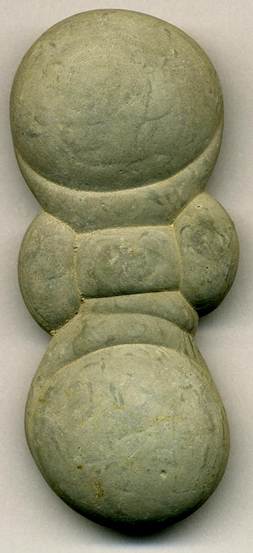
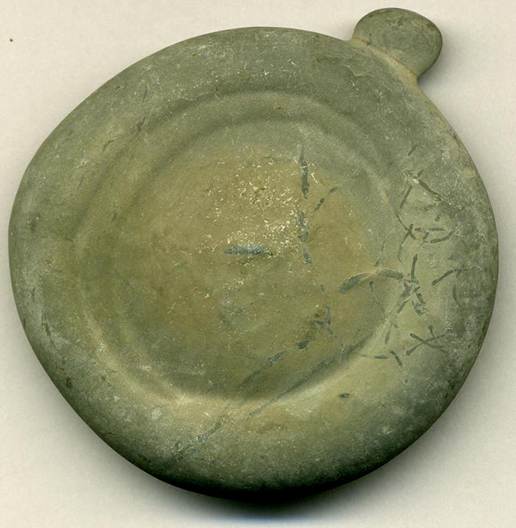
Concretions (left: 7.6 cm long; right: 6.2 cm across) - marlstone (lime-clay) concretions from near-latest Pleistocene lake deposits (~11,000 years) in the Abitibi area of western Quebec, eastern Canada. The specimen at left is remarkable for its stylized resemblance to agnostoid trilobites.
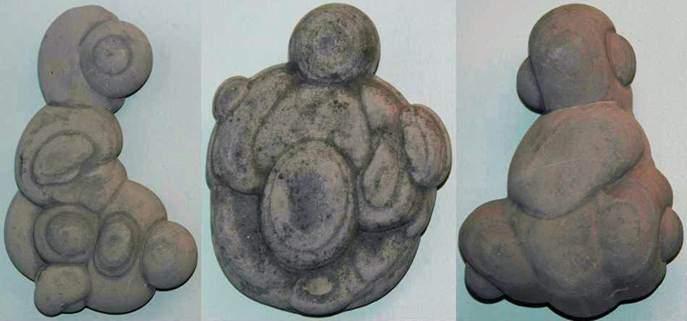
Concretions - marlstone (lime-clay) concretions from Windsor, Connecticut, USA (public display, Field Museum of Natural History, Chicago, Illinois, USA).
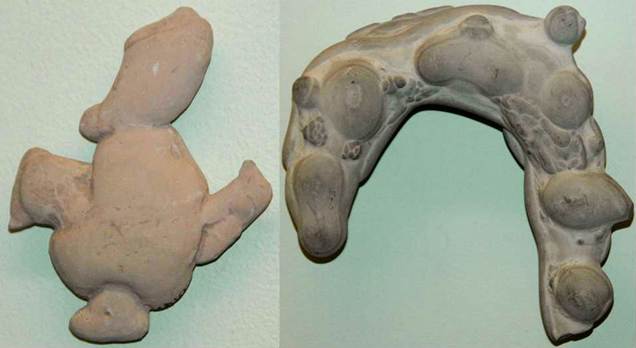
Concretions - marlstone (lime-clay) concretions from Sault Ste. Marie, eastern Upper Peninsula of Michigan, USA (public display, Field Museum of Natural History, Chicago, Illinois, USA).
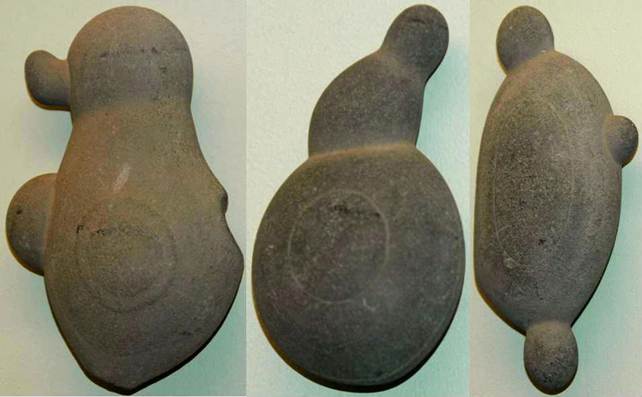
Concretions - marlstone (lime-clay) concretions from Grand Junction, Colorado, USA (public display, Field Museum of Natural History, Chicago, Illinois, USA).